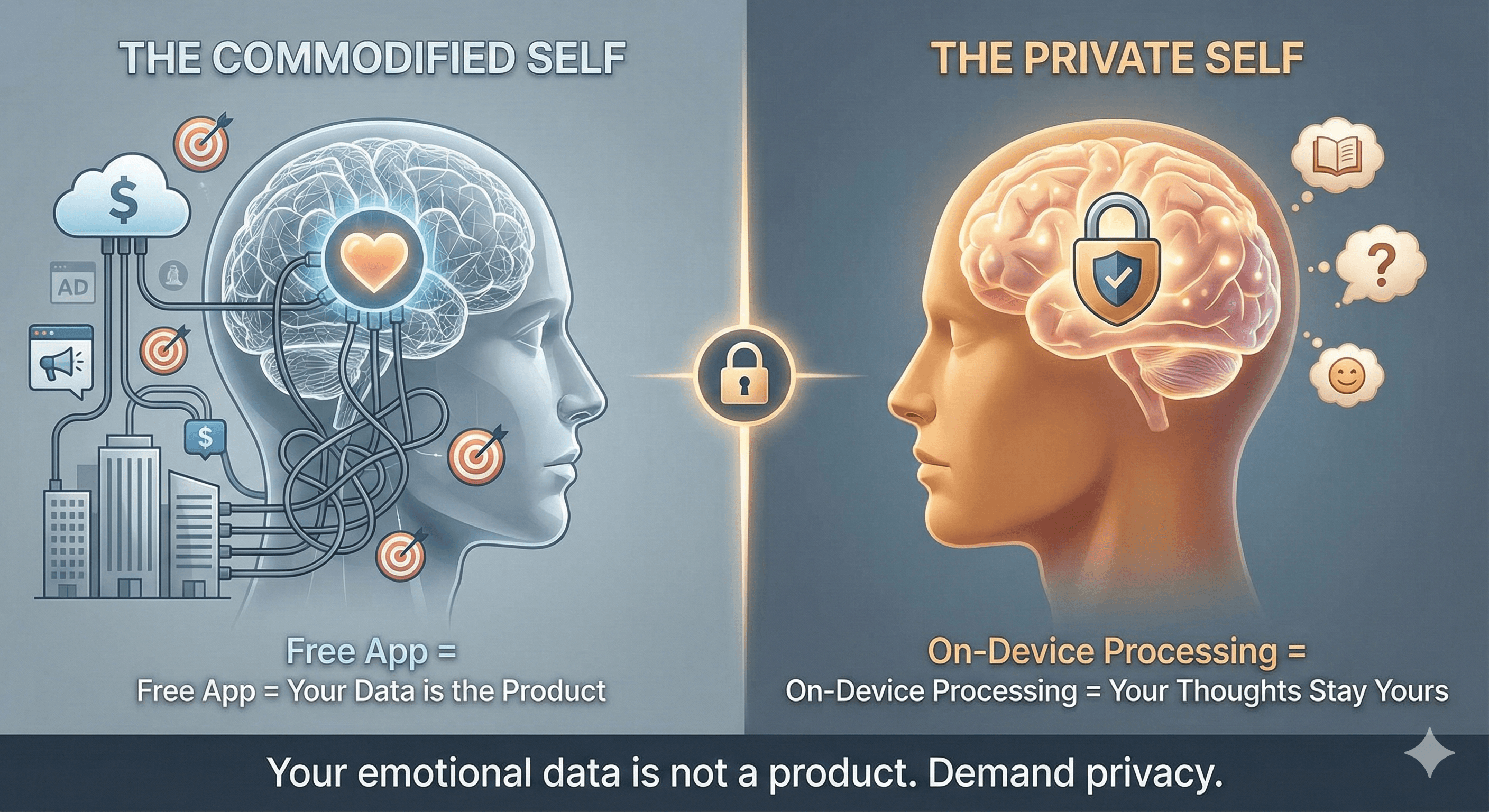
I learned something uncomfortable a few years ago: my emotions had been commodified.
Every app I used to track my health, my habits, my mood—they were collecting that data and selling insights to advertisers. My anxiety became a data point. My stress became a target. My vulnerabilities became a signal to sell me something.
The worst part? I didn't realize it was happening.
We've normalized this. Free apps are free because you're the product. We get it. We've made peace with it. But there's a difference between accepting it and accepting it for everything.
Your location data? Okay, maybe we've made peace with that. Your browsing history? Fair enough. But your mood? Your vulnerabilities? The things you only write when you're alone?
That feels different.
The Intimate Nature of Emotional Data
When you journal about your day, you're not writing for an audience. You're thinking out loud. You're processing. You're vulnerable. You write things you wouldn't say to anyone. Things you're trying to understand about yourself.
That data is intimate.
It reveals patterns about depression, anxiety, trauma, joy, love—the full spectrum of human experience. If you sell that, you're not just selling data. You're selling someone's inner life.
And yet, most "free" mood tracking apps do exactly this. They collect your emotional patterns and sell the insights to companies who want to know when you're most vulnerable, most anxious, most willing to buy something.
It's legal. It's standard practice. It's also disturbing when you really think about it.
Privacy as Table Stakes
Here's what I believe: your emotional data deserves the same privacy as your home. You wouldn't let a company install cameras in your bedroom. You wouldn't let them listen to your private conversations. So why would you let them track your mood?
The answer shouldn't be "because it's free." The answer should be "because privacy is a right, not a feature."
This is why on-device processing matters. If your data never leaves your phone, no one can sell it. Not because we're virtuous, but because we literally can't. We don't have access to it.
No cloud servers. No corporate access. No way to monetize your emotional life.
The Real Cost of "Free"
When you use a free mood app, you're not saving money. You're exchanging your emotional data for convenience. And that's a bad trade.
Because years from now, your mood history could be used to:
Target ads when you're depressed
Sell medications based on your anxiety patterns
Predict your vulnerabilities
Influence your behavior
That's not speculation. It's what companies are already doing with less intimate data.
You deserve better.
Your thoughts deserve to stay with you. Private. Protected. Actually yours.
That's not a premium feature. That's table stakes.