Test Your Financial Future

Test Your Financial Future

Test Your Financial Future

See if your retirement dreams are actually possible. Answer "what if?" before making big decisions. All on your phone. All private.

See if your retirement dreams are actually possible. Answer "what if?" before making big decisions. All on your phone. All private.

Mobile Mockup Image
Mobile Mockup Image
Mobile Mockup Image
Mobile Mockup Image
Mobile Mockup Image
Mobile Mockup Image
Mobile Mockup Image
Mobile Mockup Image

100% Offline

No Subscriptions

No Tracking

Features

Why Choose Fyre?

Why Choose Fyre?

01

Build Any Plan

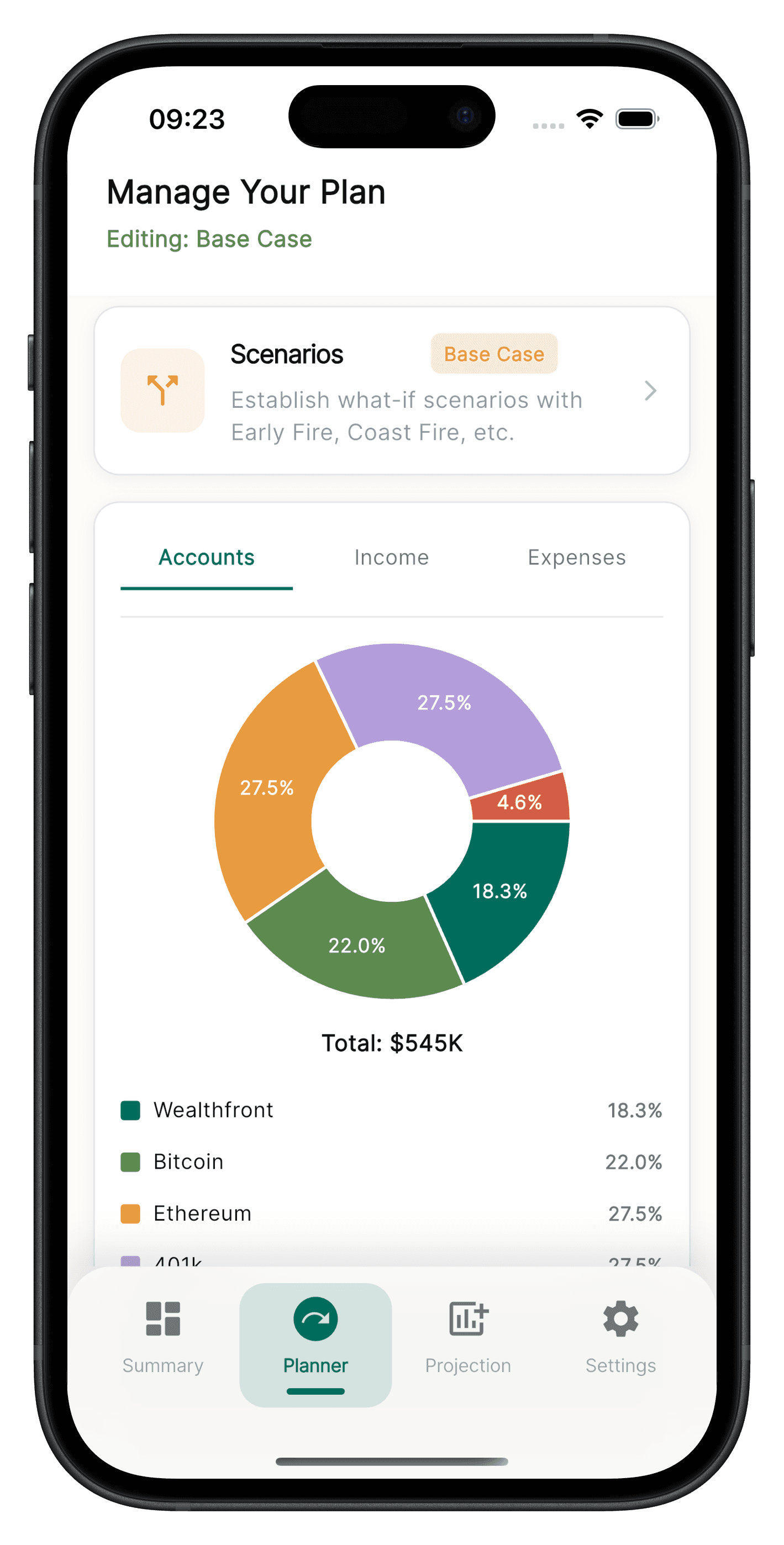
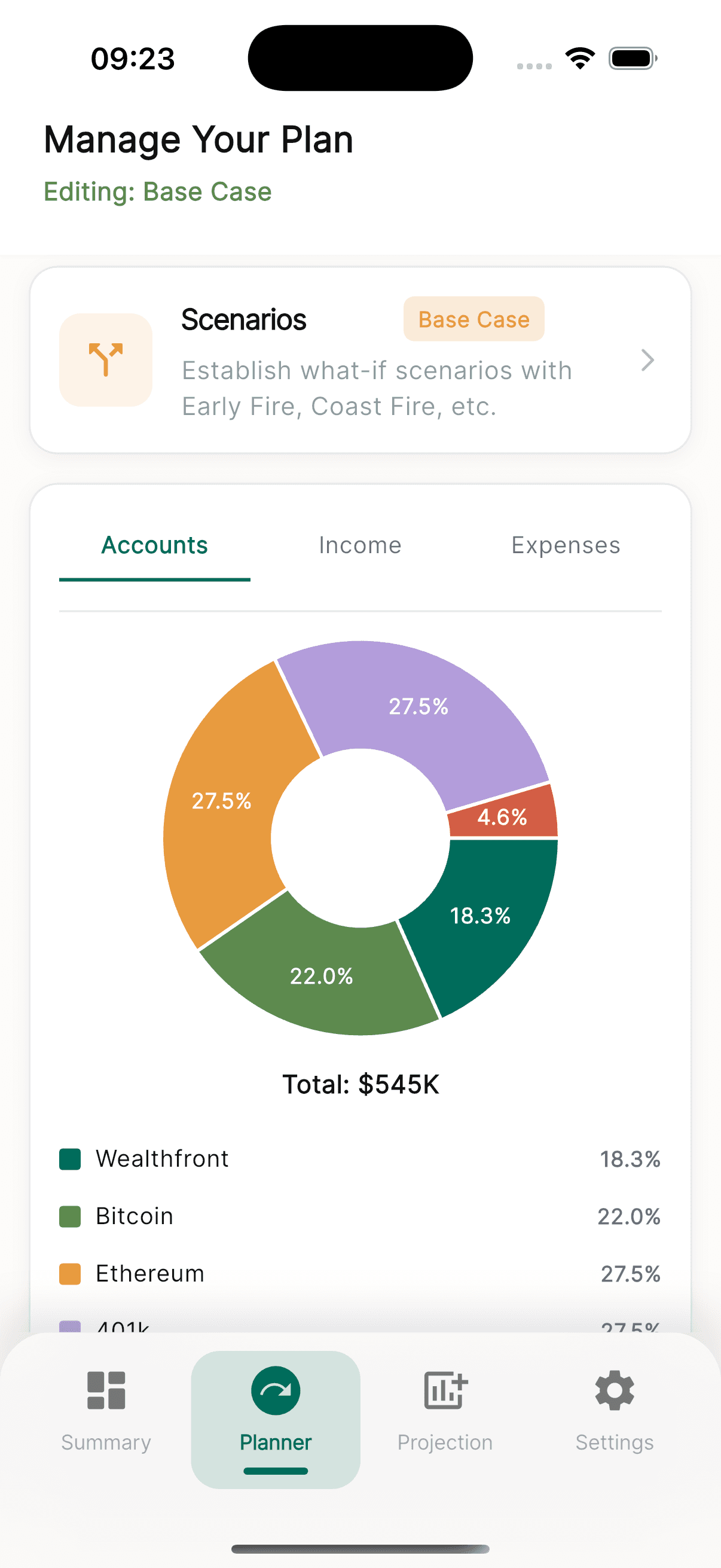
Multiple income streams, investment accounts, and spending categories. Model your complete financial life as is.

01

Build Any Plan

Multiple income streams, investment accounts, and spending categories. Model your complete financial life as is.

01

Build Any Plan

Multiple income streams, investment accounts, and spending categories. Model your complete financial life as is.

02

Test Any Future

Change one variable and see how it ripples through your entire plan. Run 10,000 market simulations instantly.

02

Test Any Future

Change one variable and see how it ripples through your entire plan. Run 10,000 market simulations instantly.

02

Test Any Future

Change one variable and see how it ripples through your entire plan. Run 10,000 market simulations instantly.

03

Understand Your Odds

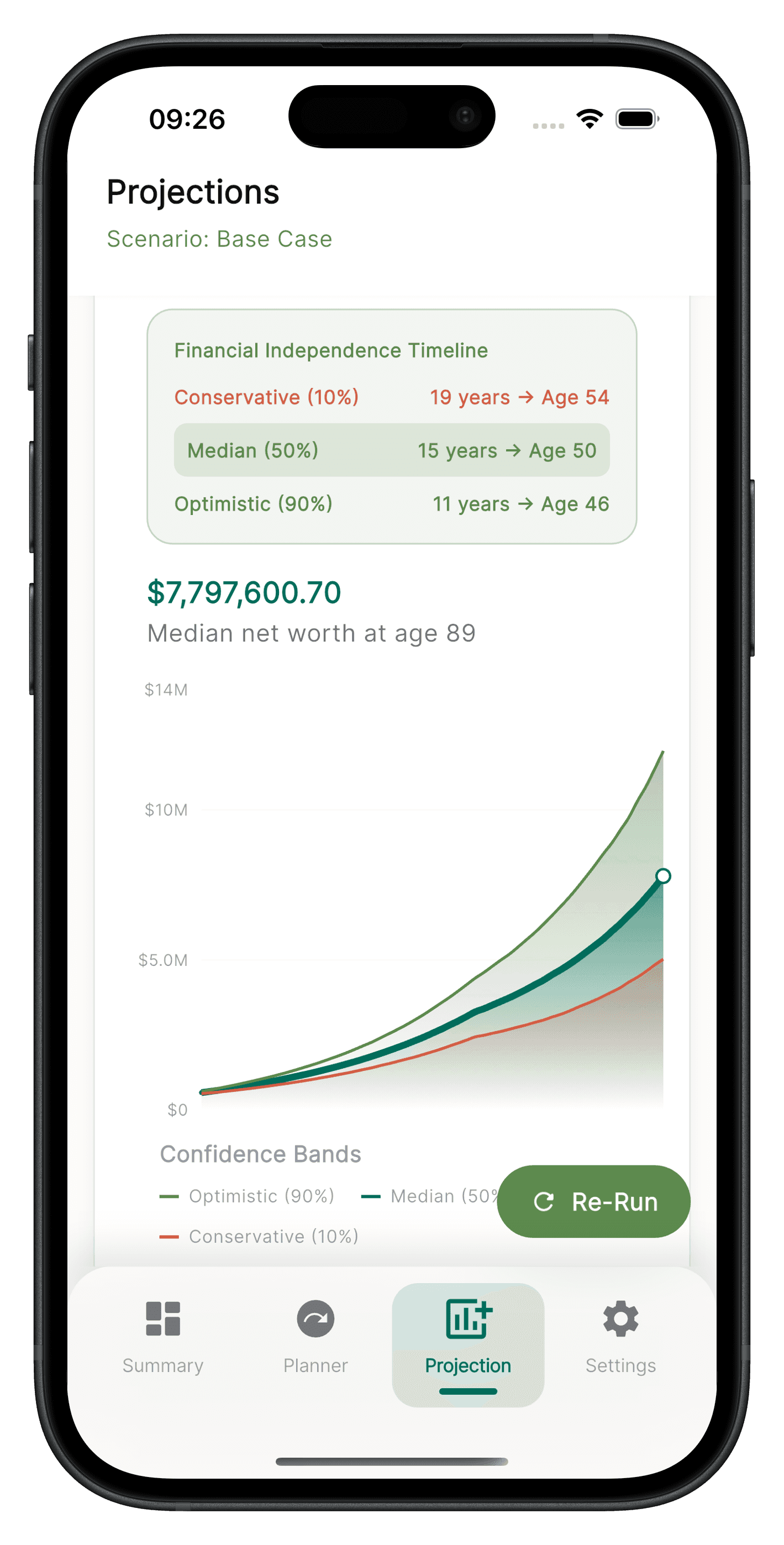
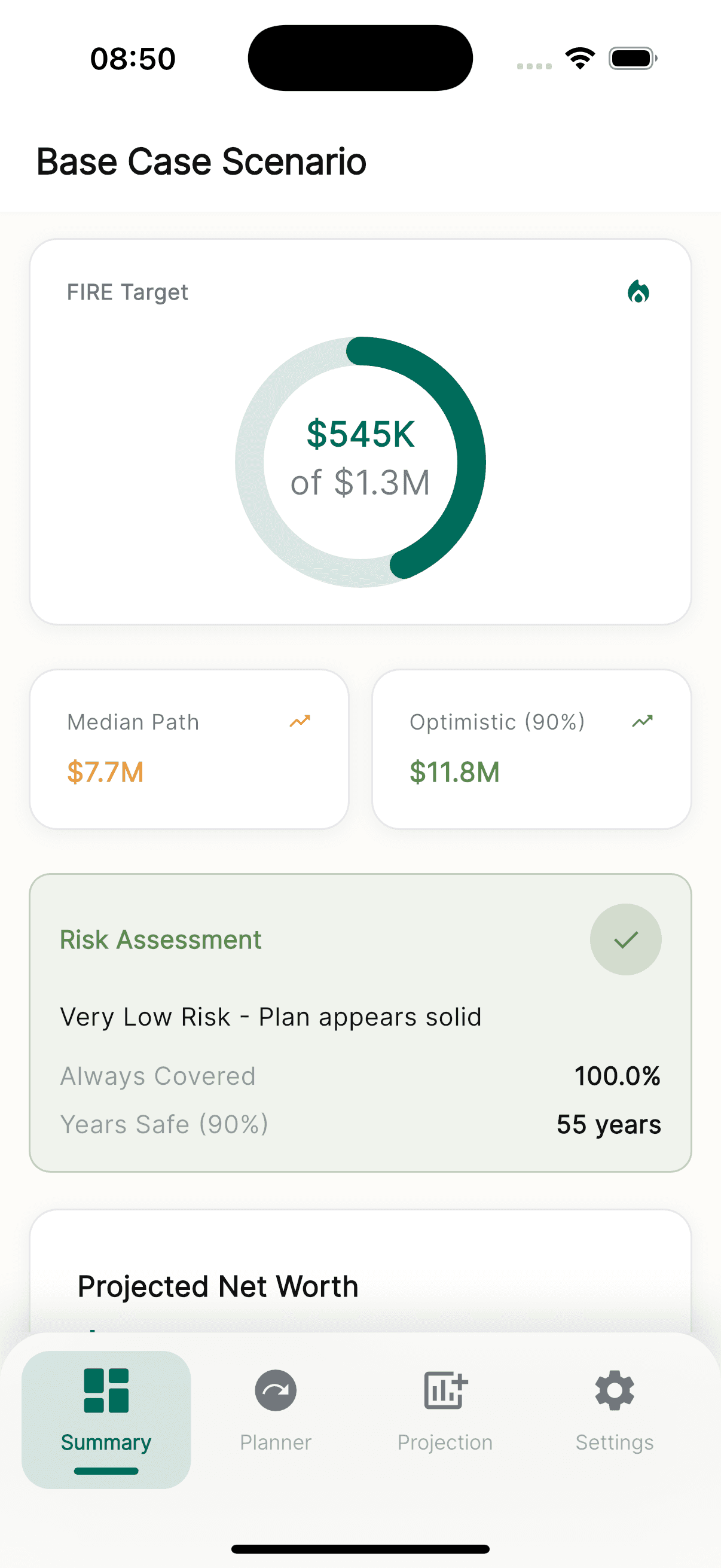
Know the probability your portfolio lasts to 90. Calculate safe spending. See when you hit financial independence.

03

Understand Your Odds

Know the probability your portfolio lasts to 90. Calculate safe spending. See when you hit financial independence.

03

Understand Your Odds

Know the probability your portfolio lasts to 90. Calculate safe spending. See when you hit financial independence.

How It Works

Simple, Fast & Effortless

Audio Image
Build Plan & Unlimited Scenarios

Add your income, investments, and spending. Set growth rates and timelines. Adjust your Scenarios as you see fit.

Audio Image
Run Monte Carlo Simulations

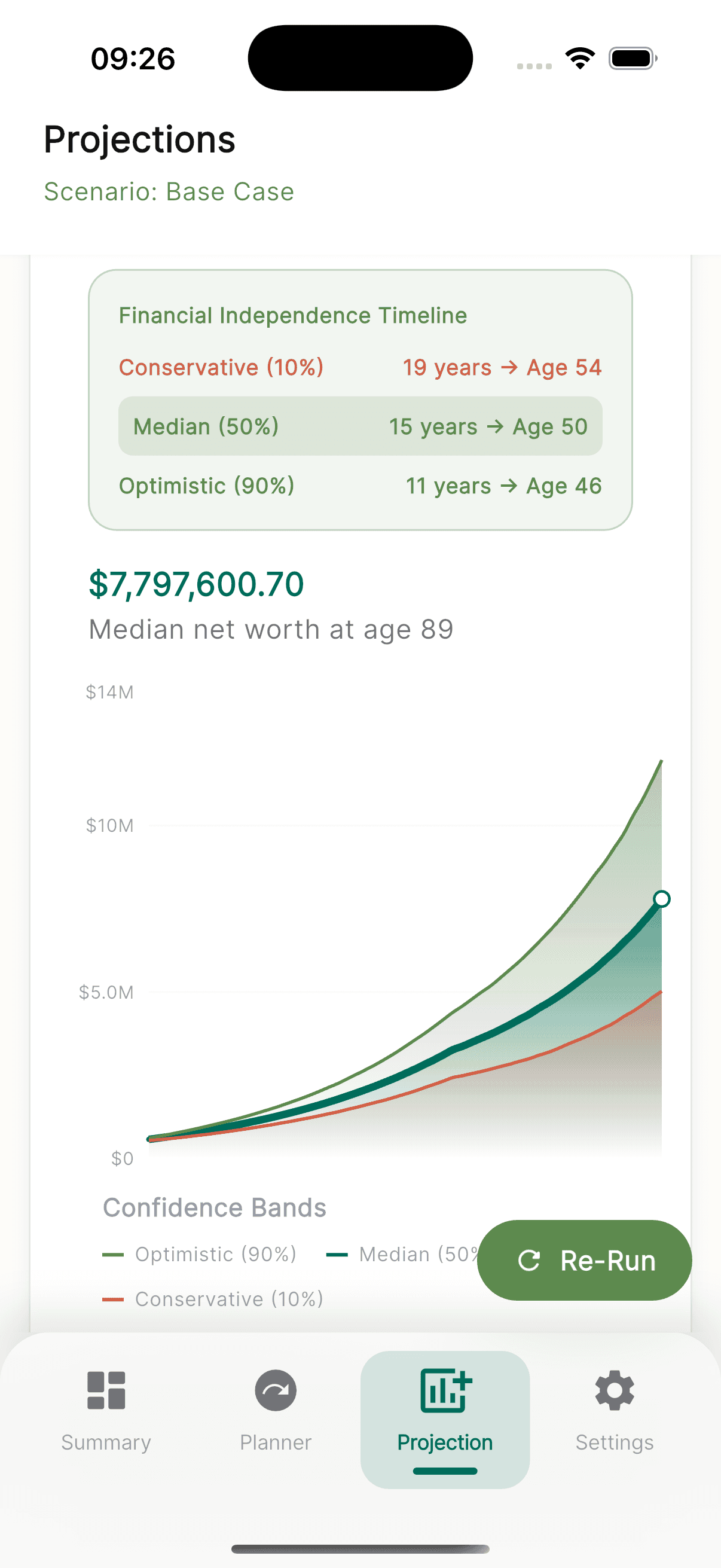
10,000 market scenarios based on real data. See the full range of outcomes. Re-run as needed with tiny adjustments in your plan.

Audio Image
Visualize & Explore. Compare.

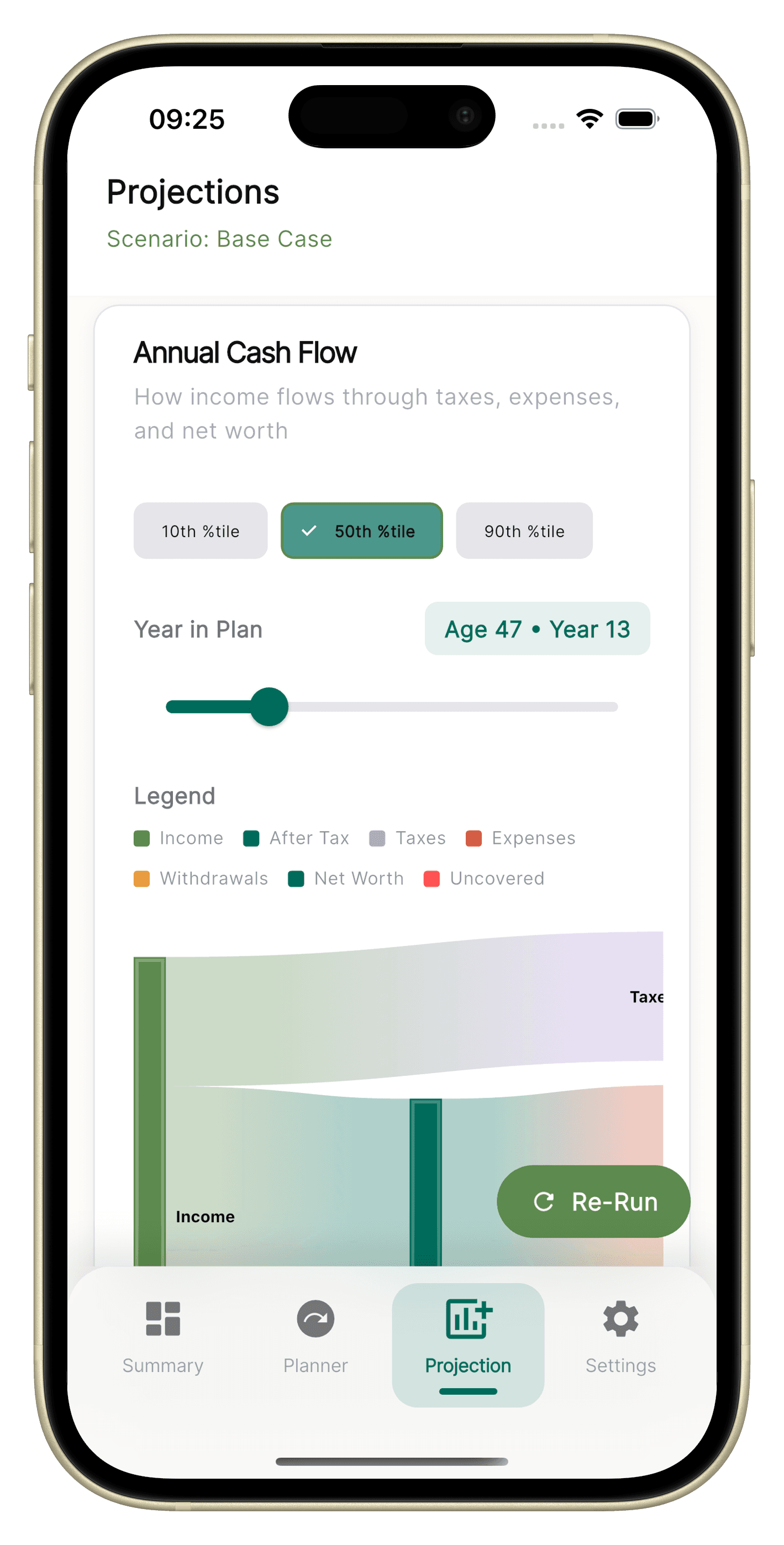
Beautiful charts that make your financial future actually make sense. Switch between scenarios. See how different choices impact your future.

Audio Image
Build Plan & Unlimited Scenarios

Add your income, investments, and spending. Set growth rates and timelines. Adjust your Scenarios as you see fit.

Audio Image
Run Monte Carlo Simulations

10,000 market scenarios based on real data. See the full range of outcomes. Re-run as needed with tiny adjustments in your plan.

Audio Image
Visualize & Explore. Compare.

Beautiful charts that make your financial future actually make sense. Switch between scenarios. See how different choices impact your future.

Audio Image
Build Plan & Unlimited Scenarios

Add your income, investments, and spending. Set growth rates and timelines. Adjust your Scenarios as you see fit.

Audio Image
Run Monte Carlo Simulations

10,000 market scenarios based on real data. See the full range of outcomes. Re-run as needed with tiny adjustments in your plan.

Audio Image
Visualize & Explore. Compare.

Beautiful charts that make your financial future actually make sense. Switch between scenarios. See how different choices impact your future.

CTA Image
CTA Image

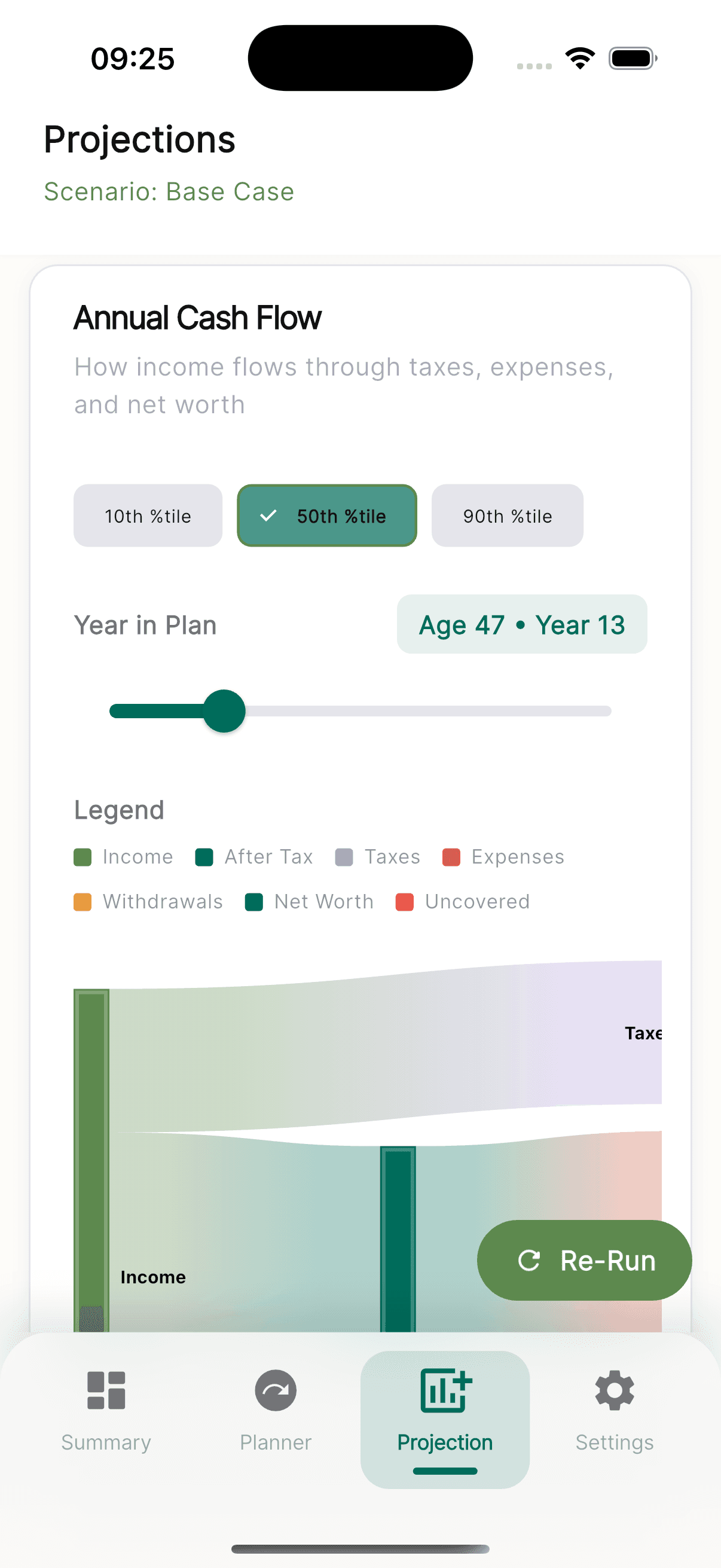
Know your exact cash flow each year

Know your exact cash flow each year

Know your exact cash flow each year

Create detailed financial plans with multiple scenarios. Each scenario functions as a complete "what-if" universe where you can model different life paths, switching careers, adjusting spending, or exploring early retirement options. Switch between scenarios instantly to compare outcomes. All your data stays on your device.

Create detailed financial plans with multiple scenarios. Each scenario functions as a complete "what-if" universe where you can model different life paths, switching careers, adjusting spending, or exploring early retirement options. Switch between scenarios instantly to compare outcomes. All your data stays on your device.

Fyre vs the Competition: Get institutional-grade financial modeling without paying $120/year subscriptions or trusting your data to the cloud.

Fyre vs the Competition: Get institutional-grade financial modeling without paying $120/year subscriptions or trusting your data to the cloud.

Mobile App

No Recurring Fees

6 Unique Charts

FAQs

Core Simulation

How does the Monte Carlo simulation work?

Fyre runs thousands of simulations (default: 10,000) of your financial future. Each simulation: 1. Starts with your current portfolio and income streams 2. Randomly generates market returns for each year using real historical volatility data 3. Applies your asset allocation across accounts 4. Applies taxes and withdrawals based on your account types 5. Tracks whether you run out of money before your mortality age The simulation runs from your current age until your mortality age

What market assumptions does Fyre use?

Fyre models five asset classes with historical return expectations: * US Stocks: 7% annual return, 18% volatility * Bonds: 4% annual return, 6% volatility * International Stocks: 6.5% annual return, 20% volatility * Real Estate: 7.5% annual return, 15% volatility * Commodities: 5% annual return, 15% volatility You can customize these in Settings → Market Assumptions.

How does inflation work?

Fyre applies your global inflation rate (default: 2.5% annually) to expenses and income streams marked as "inflation-adjusted." This means your living costs and salary growth are simulated to increase each year.

How does the Monte Carlo simulation work?

Fyre runs thousands of simulations (default: 10,000) of your financial future. Each simulation: 1. Starts with your current portfolio and income streams 2. Randomly generates market returns for each year using real historical volatility data 3. Applies your asset allocation across accounts 4. Applies taxes and withdrawals based on your account types 5. Tracks whether you run out of money before your mortality age The simulation runs from your current age until your mortality age

What market assumptions does Fyre use?

Fyre models five asset classes with historical return expectations: * US Stocks: 7% annual return, 18% volatility * Bonds: 4% annual return, 6% volatility * International Stocks: 6.5% annual return, 20% volatility * Real Estate: 7.5% annual return, 15% volatility * Commodities: 5% annual return, 15% volatility You can customize these in Settings → Market Assumptions.

How does inflation work?

Fyre applies your global inflation rate (default: 2.5% annually) to expenses and income streams marked as "inflation-adjusted." This means your living costs and salary growth are simulated to increase each year.

How does the Monte Carlo simulation work?

Fyre runs thousands of simulations (default: 10,000) of your financial future. Each simulation: 1. Starts with your current portfolio and income streams 2. Randomly generates market returns for each year using real historical volatility data 3. Applies your asset allocation across accounts 4. Applies taxes and withdrawals based on your account types 5. Tracks whether you run out of money before your mortality age The simulation runs from your current age until your mortality age

What market assumptions does Fyre use?

Fyre models five asset classes with historical return expectations: * US Stocks: 7% annual return, 18% volatility * Bonds: 4% annual return, 6% volatility * International Stocks: 6.5% annual return, 20% volatility * Real Estate: 7.5% annual return, 15% volatility * Commodities: 5% annual return, 15% volatility You can customize these in Settings → Market Assumptions.

How does inflation work?

Fyre applies your global inflation rate (default: 2.5% annually) to expenses and income streams marked as "inflation-adjusted." This means your living costs and salary growth are simulated to increase each year.

Account & Tax Handling

What are the three account types?

1. Taxable: Regular investment accounts (you pay taxes on gains annually) 2. Tax-Deferred: 401(k), traditional IRA (you pay taxes on withdrawals) 3. Tax-Free: Roth IRA, 529 plans (no taxes on withdrawals)

How are withdrawals prioritized?

How are withdrawals prioritized? Fyre withdraws money in a specific order based on your tax strategy region: * North America (US/Canada): Tax-Free → Tax-Deferred → Taxable * Europe (EU/UK): Taxable → Tax-Deferred → Tax-Free * Asia-Pacific (Japan/Australia): Tax-Deferred → Tax-Free → Taxable This is called a "withdrawal sequence strategy" and minimizes taxes.

How are taxes calculated?

Fyre tracks two types of taxes: 1. Income Taxes: Applied to wages, salary, and pension income at your marginal tax rate 2. Withdrawal Taxes: Applied only to tax-deferred withdrawals (tax-free and taxable accounts don't trigger additional taxes) Total taxes = Income taxes + Withdrawal taxes You can set your marginal tax rate in Settings → Market Assumptions.

What are the three account types?

1. Taxable: Regular investment accounts (you pay taxes on gains annually) 2. Tax-Deferred: 401(k), traditional IRA (you pay taxes on withdrawals) 3. Tax-Free: Roth IRA, 529 plans (no taxes on withdrawals)

How are withdrawals prioritized?

How are withdrawals prioritized? Fyre withdraws money in a specific order based on your tax strategy region: * North America (US/Canada): Tax-Free → Tax-Deferred → Taxable * Europe (EU/UK): Taxable → Tax-Deferred → Tax-Free * Asia-Pacific (Japan/Australia): Tax-Deferred → Tax-Free → Taxable This is called a "withdrawal sequence strategy" and minimizes taxes.

How are taxes calculated?

Fyre tracks two types of taxes: 1. Income Taxes: Applied to wages, salary, and pension income at your marginal tax rate 2. Withdrawal Taxes: Applied only to tax-deferred withdrawals (tax-free and taxable accounts don't trigger additional taxes) Total taxes = Income taxes + Withdrawal taxes You can set your marginal tax rate in Settings → Market Assumptions.

What are the three account types?

1. Taxable: Regular investment accounts (you pay taxes on gains annually) 2. Tax-Deferred: 401(k), traditional IRA (you pay taxes on withdrawals) 3. Tax-Free: Roth IRA, 529 plans (no taxes on withdrawals)

How are withdrawals prioritized?

How are withdrawals prioritized? Fyre withdraws money in a specific order based on your tax strategy region: * North America (US/Canada): Tax-Free → Tax-Deferred → Taxable * Europe (EU/UK): Taxable → Tax-Deferred → Tax-Free * Asia-Pacific (Japan/Australia): Tax-Deferred → Tax-Free → Taxable This is called a "withdrawal sequence strategy" and minimizes taxes.

How are taxes calculated?

Fyre tracks two types of taxes: 1. Income Taxes: Applied to wages, salary, and pension income at your marginal tax rate 2. Withdrawal Taxes: Applied only to tax-deferred withdrawals (tax-free and taxable accounts don't trigger additional taxes) Total taxes = Income taxes + Withdrawal taxes You can set your marginal tax rate in Settings → Market Assumptions.

Analysis Charts

Portfolio Longevity

How it works: For each year in the simulation, Fyre counts how many of the 10,000 trials had positive net worth. This percentage becomes your "success rate" at that age. Example: If 8,500 out of 10,000 trials had money at age 85, that's an 85% success rate at that age.

Lifetime Spending Power

How it works: * 4% Rule Component: Fyre calculates 4% of your current portfolio value (historically safe) * Guaranteed Income: Adds any pensions or Social Security income that continues * Total: Safe withdrawal + Guaranteed income = Sustainable spending * Comparison: If this total is above your expenses, you can sustain your lifestyle Formula: Sustainable Spending = (Portfolio × 4%) + Pension/Social Security

Withdrawal Rate Analysis

How it works: * Withdrawal Rate = Annual withdrawal ÷ Starting portfolio value at retirement * 4% Rule Benchmark: Historical data shows you can safely withdraw 4% annually * Green line: Your actual withdrawal rate each year * Blue line: The 4% rule benchmark Interpretation: If your withdrawal rate stays below the 4% rule, you're in a safe zone.

Portfolio Longevity

How it works: For each year in the simulation, Fyre counts how many of the 10,000 trials had positive net worth. This percentage becomes your "success rate" at that age. Example: If 8,500 out of 10,000 trials had money at age 85, that's an 85% success rate at that age.

Lifetime Spending Power

How it works: * 4% Rule Component: Fyre calculates 4% of your current portfolio value (historically safe) * Guaranteed Income: Adds any pensions or Social Security income that continues * Total: Safe withdrawal + Guaranteed income = Sustainable spending * Comparison: If this total is above your expenses, you can sustain your lifestyle Formula: Sustainable Spending = (Portfolio × 4%) + Pension/Social Security

Withdrawal Rate Analysis

How it works: * Withdrawal Rate = Annual withdrawal ÷ Starting portfolio value at retirement * 4% Rule Benchmark: Historical data shows you can safely withdraw 4% annually * Green line: Your actual withdrawal rate each year * Blue line: The 4% rule benchmark Interpretation: If your withdrawal rate stays below the 4% rule, you're in a safe zone.

Portfolio Longevity

How it works: For each year in the simulation, Fyre counts how many of the 10,000 trials had positive net worth. This percentage becomes your "success rate" at that age. Example: If 8,500 out of 10,000 trials had money at age 85, that's an 85% success rate at that age.

Lifetime Spending Power

How it works: * 4% Rule Component: Fyre calculates 4% of your current portfolio value (historically safe) * Guaranteed Income: Adds any pensions or Social Security income that continues * Total: Safe withdrawal + Guaranteed income = Sustainable spending * Comparison: If this total is above your expenses, you can sustain your lifestyle Formula: Sustainable Spending = (Portfolio × 4%) + Pension/Social Security

Withdrawal Rate Analysis

How it works: * Withdrawal Rate = Annual withdrawal ÷ Starting portfolio value at retirement * 4% Rule Benchmark: Historical data shows you can safely withdraw 4% annually * Green line: Your actual withdrawal rate each year * Blue line: The 4% rule benchmark Interpretation: If your withdrawal rate stays below the 4% rule, you're in a safe zone.

Settings & Customization

What does "Marginal Tax Rate" mean?

Your marginal tax rate is the tax bracket you fall into — the percentage of your next dollar earned that goes to taxes. It's used to calculate taxes on income and tax-deferred withdrawals. Example: If you earn $100,000 and are in the 25% bracket, your marginal tax rate is 25%.

What about progressive taxation?

Fyre has two tax calculation modes: 1. Flat Rate (default): Simple — applies your marginal tax rate to all income 2. Progressive Brackets (advanced): Uses actual tax brackets based on your region Progressive taxation is more accurate but slower. Use flat rate for quick estimates.

Can I adjust asset class assumptions?

Yes! In Settings → Market Assumptions → Asset Class Returns, you can customize: * Expected annual return (default 7% for stocks, 4% for bonds, etc.) * Volatility/standard deviation (default 18% for stocks, 6% for bonds, etc.) These changes immediately affect your next simulation.

What does "Marginal Tax Rate" mean?

Your marginal tax rate is the tax bracket you fall into — the percentage of your next dollar earned that goes to taxes. It's used to calculate taxes on income and tax-deferred withdrawals. Example: If you earn $100,000 and are in the 25% bracket, your marginal tax rate is 25%.

What about progressive taxation?

Fyre has two tax calculation modes: 1. Flat Rate (default): Simple — applies your marginal tax rate to all income 2. Progressive Brackets (advanced): Uses actual tax brackets based on your region Progressive taxation is more accurate but slower. Use flat rate for quick estimates.

Can I adjust asset class assumptions?

Yes! In Settings → Market Assumptions → Asset Class Returns, you can customize: * Expected annual return (default 7% for stocks, 4% for bonds, etc.) * Volatility/standard deviation (default 18% for stocks, 6% for bonds, etc.) These changes immediately affect your next simulation.

What does "Marginal Tax Rate" mean?

Your marginal tax rate is the tax bracket you fall into — the percentage of your next dollar earned that goes to taxes. It's used to calculate taxes on income and tax-deferred withdrawals. Example: If you earn $100,000 and are in the 25% bracket, your marginal tax rate is 25%.

What about progressive taxation?

Fyre has two tax calculation modes: 1. Flat Rate (default): Simple — applies your marginal tax rate to all income 2. Progressive Brackets (advanced): Uses actual tax brackets based on your region Progressive taxation is more accurate but slower. Use flat rate for quick estimates.

Can I adjust asset class assumptions?

Yes! In Settings → Market Assumptions → Asset Class Returns, you can customize: * Expected annual return (default 7% for stocks, 4% for bonds, etc.) * Volatility/standard deviation (default 18% for stocks, 6% for bonds, etc.) These changes immediately affect your next simulation.

Common Questions

Why do my results change between simulations?

Monte Carlo simulations are random. Each run generates different market returns. Running more trials (higher number in Settings) makes results more stable but takes longer.

What if my success rate is 85%?

An 85% success rate means there's a 15% chance you run out of money in retirement. Many financial advisors recommend 90%+ for comfort, but this depends on your risk tolerance.

Can I account for big one-time expenses?

Yes! Add them as expenses with specific start/end years. For example, add a $50,000 expense at age 65 for a home renovation.
Why do my results change between simulations?

Monte Carlo simulations are random. Each run generates different market returns. Running more trials (higher number in Settings) makes results more stable but takes longer.

What if my success rate is 85%?

An 85% success rate means there's a 15% chance you run out of money in retirement. Many financial advisors recommend 90%+ for comfort, but this depends on your risk tolerance.

Can I account for big one-time expenses?

Yes! Add them as expenses with specific start/end years. For example, add a $50,000 expense at age 65 for a home renovation.

Why do my results change between simulations?

Monte Carlo simulations are random. Each run generates different market returns. Running more trials (higher number in Settings) makes results more stable but takes longer.

What if my success rate is 85%?

An 85% success rate means there's a 15% chance you run out of money in retirement. Many financial advisors recommend 90%+ for comfort, but this depends on your risk tolerance.

Can I account for big one-time expenses?

Yes! Add them as expenses with specific start/end years. For example, add a $50,000 expense at age 65 for a home renovation.

CTA Image
CTA Image
CTA Image

Ready to Own Your Financial Future?

Ready to Own Your Financial Future?

Ready to Own Your Financial Future?

Thank you for using Fyre. We are committed to helping you achieve your optimal financial goals. If you have any questions, feedback, or encounter an issue, please don't hesitate to reach out Email us at support@qypt.ai

Thank you for using Fyre. We are committed to helping you achieve your optimal financial goals. If you have any questions, feedback, or encounter an issue, please don't hesitate to reach out Email us at support@qypt.ai